

Ten Small French Things That Still Feel Like Magic
A €25 dining chair, a bread that doesn't spike your blood sugar, and a startling amount of evidence that I am Belle.

We've lived in France for almost three years now, which is long enough to stop being shocked by anything and just long enough to start sentences with "in France, we…" without irony. Things that floored me in month one are now things I do without thinking. I now say bonjour to a room before I say anything else. I now keep a butter dish on the counter at all times. I can now tell the difference between a basic and a high quality baguette.
But every so often I'll be doing something completely ordinary, buying bread, walking past a house with a name on a small stone plaque, picking up the kids, and I'll have to physically stop and remind myself this is the regular Tuesday now.
It’s the small things that do it. This post is a list of ten of those things. The ones that don’t make it into the moved-to-France-and-everything-changed essays because they sound too tiny to mention. But they are not too tiny. They are, in fact, why I'm still here.
If you’re new here, welcome. We’re an American family living in a small château in rural France, raising two small children, restoring the building slowly, and figuring out the rest as we go. The essays land in your inbox each week. Join us.
1. Bonjour. Always. First. Before anything else.
There is a scene at the opening of Disney’s Beauty and the Beast where Belle walks through her little French village and everyone is popping out of windows and doorways calling bonjour, bonjour, bonjour, bonjour, BONJOUR! at each other in a kind of escalating chorus, while she winds through them with her nose in a book. There goes the baker with his tray, like always...
That was not an exaggeration. That is my life now. I am basically Belle.
I may not have her innocent youth, and I am not in love with a hairy beast (well, kind of). But I do often have my nose stuck in a book (or my ear stuck in an audiobook, or my eyes…stuck in a Kindle? The phrase has not modernized well), and I am sometimes regarded by the locals as a little odd. To be fair, this is mostly for my Americanness rather than my bookworminess. The bookworm part they actually approve of.
You do not walk into a French shop and ask where the lentils are. You walk into a French shop, you make eye contact with whoever is closest, you say bonjour, and then you ask where the lentils are. If you skip the bonjour, the lentils will not be found. Sometimes the lentils will, in a dignified way, never have existed.
This applies everywhere. The bakery. The waiting room at the doctor. The school office. The post office. The hardware store at 4:55 on a Friday when everyone is already mentally on the weekend. You acknowledge the person before you ask the person for anything. Every time.
I love this so much I have started doing it back in the United States, where it makes me look mildly unhinged. A Whole Foods cashier in California once thanked me with the wary tone of someone politely declining a religious pamphlet.
The kid version of this is even better. At our village school, every child at pickup walks up to the teacher at the door, says au revoir, and is sent off by name. It takes about four seconds per child. Multiply that by every school day, from age three, and you start to understand why French teenagers behave the way they do. (I wrote about that part here.)
2. The bread. Just…chef’s kiss
I am not talking about a loaf of square bread sealed in plastic with the structural integrity of upholstery foam. I am talking about a round boule that you ask the boulangère to slice for you (tranchée, s’il vous plaît) and that she slides through a small machine in the back without breaking stride. I am talking about a baguette that you carry home under your arm and that is meaningfully shorter by the time you walk through the door, because you cannot help yourself, and neither can your children.
A friend of ours came to visit last fall. She’s diabetic and wears a continuous glucose monitor (one of those small white discs that lives on the back of your arm and tattles in real time). She ate baguette with us at lunch on her first day, the way you do, and then she pulled out her phone and just stared at it. Her glucose had barely moved. She told me it had never not moved like that in her 60 years of life. We sat there at the kitchen table looking at her phone like it was a magic eight-ball.
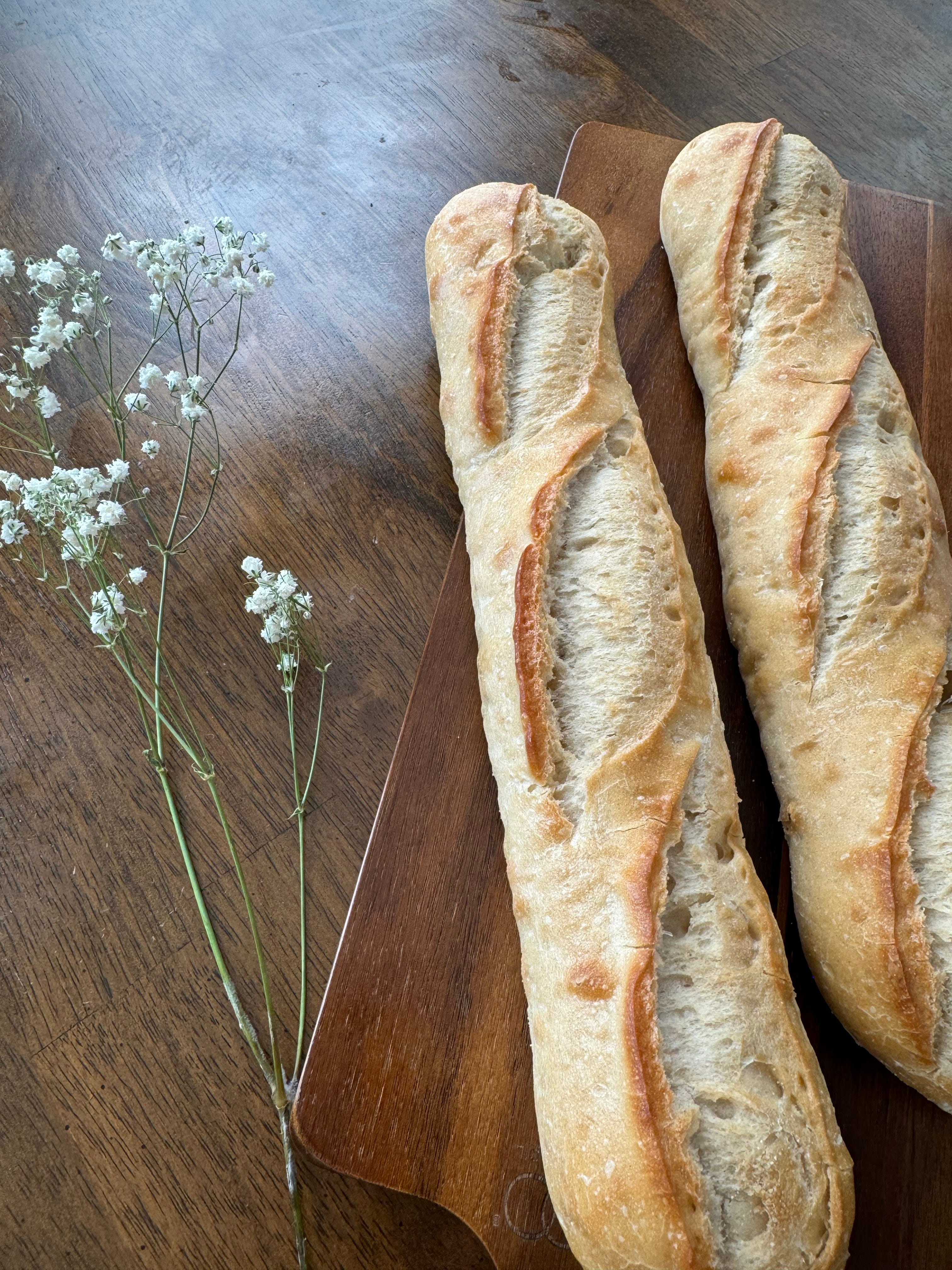
I cannot fully explain this. The bread is older. The flours are different. The whole supply chain is built around the boulangerie down the street rather than a factory in another time zone. Whatever the reason, here’s the lived experience: I eat bread every day, I do not feel like a bloated goat, I have not been visited by guilt in approximately two and a half years, and I would like to formally apologize to every premium loaf I dismissed for most of my adult life.
The boulangerie is the heart of the village. You go in the morning. You greet everyone. You leave with something warm. You are slightly more of a person than you were five minutes ago.
3. The friendliness (yes, really).
I know. I know what you’ve heard. I heard it too, for thirty-some years, and then I moved here and the rumor turned out to be mostly about Paris in August, mostly about waiters who simply do not feel they owe you a performance, and mostly leftover from a feud the French and the British have been running since before the invention of central heating.
What I have actually found, in our village and the ones around it: pharmacists who walk me through every obscure tincture like I’m a beloved cousin, teachers who do not care that I butcher chèvre chaud, neighbors who knocked on the door with a duck. I wrote a whole piece about this when we’d been in our current village for three months, and the short version of it is: if you say bonjour first and you try a little, you will be astonished how warm a country with a reputation for froideur can be.
4. La brocante. The whole attitude toward old things.
A brocante is a flea market, but calling it that is like calling a wedding a party. It misses what’s actually happening.
What’s happening is an entire culture that has decided, collectively, that old things are not embarrassing. A chipped Limoges plate is better than the new plate. An embroidered linen sheet with someone else’s grandmother’s initials in the corner is the sheet you want. The little brass bell, the dented copper pot, the silver fork with a slight twist in the tines from a hundred years of being washed by hand. All of it has value, because it has lived. It has history.
We bought a croquet set at a brocante last spring. It is one hundred and fifty years old. Some of the mallets have hairline cracks. One or two of the balls are missing entirely. We played with it on the lawn on Easter Sunday, with gaps mowed into the grass, and I have rarely been happier with a purchase in my life.


In America, it often felt like old was “a problem to be solved,” in furniture and in faces. Here in France, old is the feature.
Here is the other thing, which I did not fully grasp until I started living here.
When we lived in Los Angeles, I used to scroll through shops like Elsie Green and Amber Interiors and Olive Ateliers the way other people scroll through Zillow. I would look at a single wooden farm table for $4,200 and feel a kind of yearning that was not entirely healthy. I assumed the prices were the prices. I assumed this is what beautiful old French things cost.
They are not the prices. Let me show you an example.
Here is an oak dining chair currently listed on Olive Ateliers for $295.

Here is its near-twin, which I bought at a brocante about forty minutes from our house, in a set of four, for €25 total (yes, for all four).
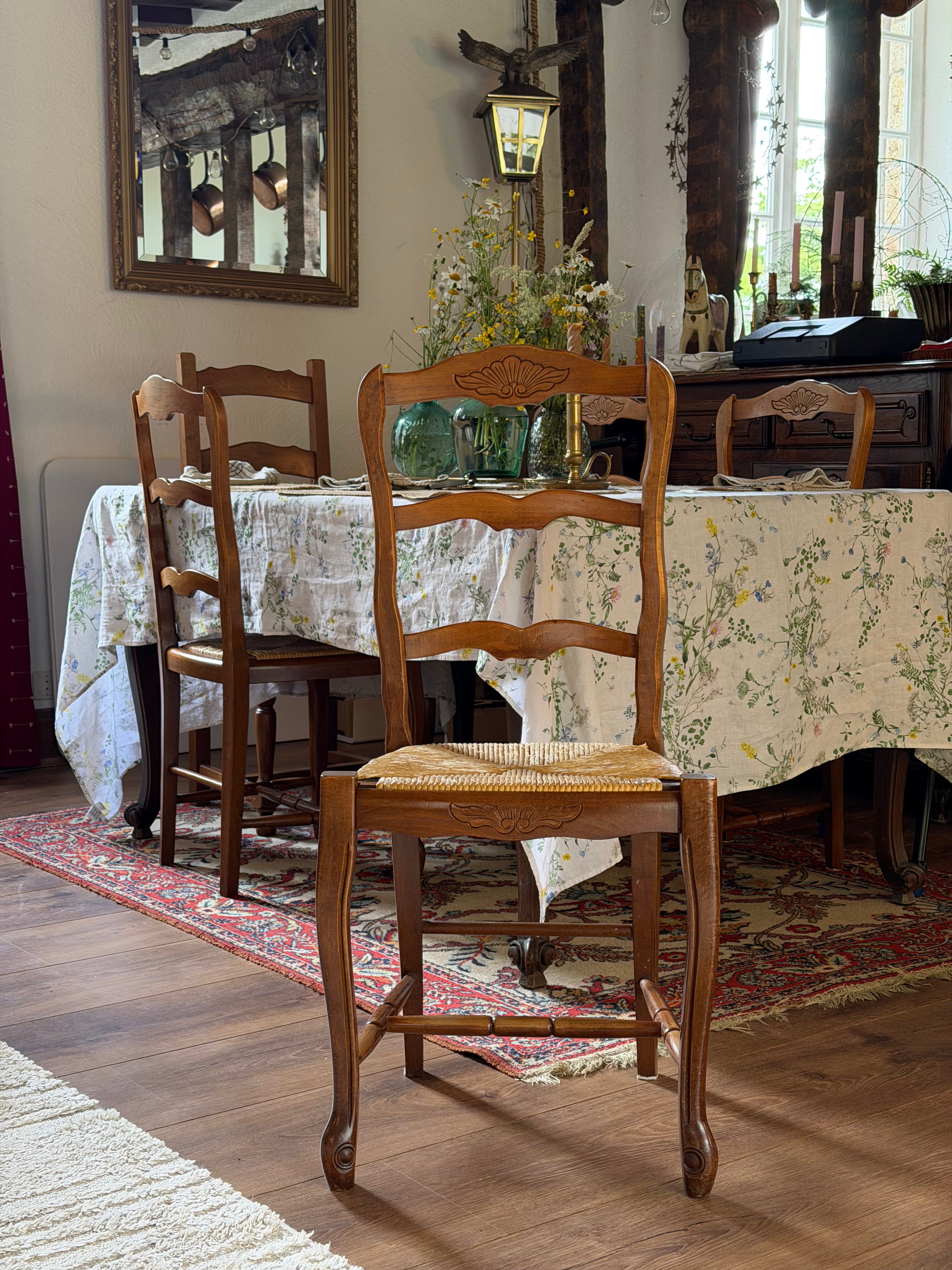
That math is correct. The chair I am sitting in right now to write this cost approximately six euros.
I do not say this to drag the shops. Those shops are doing the actual work — sourcing, restoring, shipping, photographing, listing, marketing, and absorbing the customs nightmare that is bringing antique European furniture into the United States. The markup is the price of that work, and it is fair. I have used those websites to dream for years. I will probably use them again when I am back in California visiting and I want to buy a friend something small and lovely (like a French candlestick).
But living here, the math is different. The same objects are just...around. In barns. On lawns. At Sunday markets where the seller is also eating a sandwich. Old, in France, is also affordable, which may be the most magical thing about it.
5. The naming of houses.
Drive five minutes outside any French village and you will pass small stone plaques set into walls, hand-painted signs on gates, brass letters above doorways. La Maison Neuve. Les Tilleuls. Le Petit Moulin. La Roseraie. The new house. The lindens. The little mill. The rose garden.
Every house has a name. Not a number (although it usually has one of those too, at least on paper). A name.
I cannot tell you how much this changes the experience of looking for someone’s address. You are not driving to 47 Rue de Whatever. You are driving to the little mill. You are looking, in the dusk, for a sign that says Les Tilleuls and a row of lime trees. You arrive somewhere and you know what it’s called and the place has, immediately, a story.


Our château has a name, and every time we use it on a piece of paperwork, the person on the other end smiles slightly. Ah oui. Très joli. They have already imagined the house, and maybe the stories.
6. L’apéro. The whole social grammar of it.
The apéro is what happens between the day is ending and dinner has begun. It is the engineered pause. The cultural decompression chamber.
It is also, structurally, a small party that breaks out approximately one hour before dinner, requires almost no advance planning, and is governed by rules that I am still learning. There is a bowl of olives. There is saucisson sliced thin. There is something to drink that is not water but also not a full glass of wine, a kir, maybe, or a pastis, or a small glass of something cold. There are two or three little crackers per person, which everyone eats slowly while standing or sitting near each other and talking about nothing of consequence.
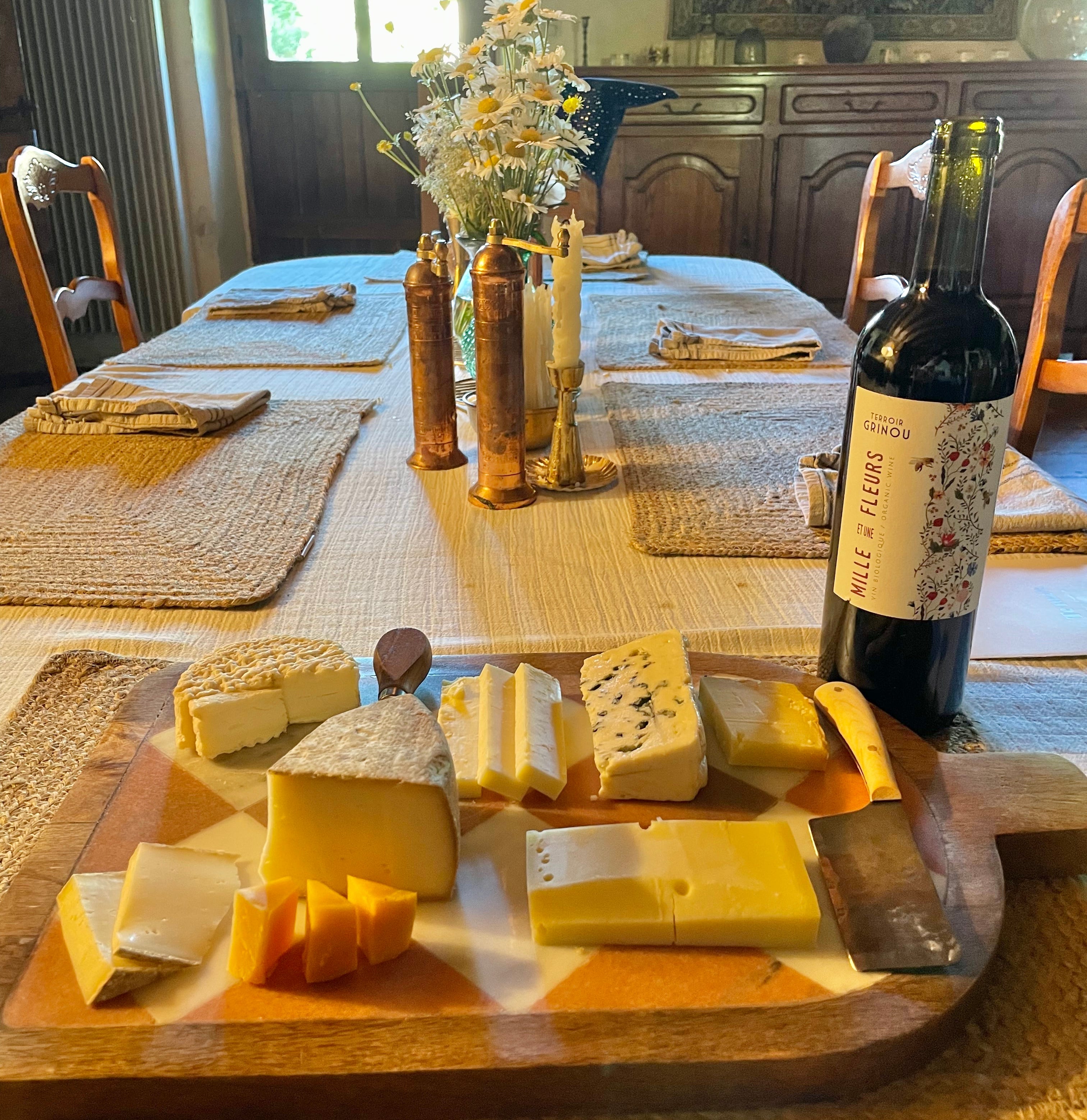
It can be casual. It can be elegant. It can be a folding table in someone’s driveway. It can also, and this is the great risk, last three hours, accidentally become dinner, and end with someone going inside to get a tarte they had thought they were saving for tomorrow.
The first time we hosted neighbors for apéro I made the rookie American error of putting out approximately four times too much food. They ate it all and then we still had dinner. I have since learned restraint. (See item nine.)
Halfway through the list, and a quick aside. If you're enjoying this, the easiest way to keep these coming is the free subscription, one essay a week, straight to your inbox, no algorithm in the middle. There's also a paid version for the readers who want the renovation diaries, the château tours, and the messier parts of building a life here. Either one is a kindness.
7. Les grandes vacances. The national exhale.
Every August, France closes.
I do not mean this metaphorically. I mean entire businesses tape a piece of paper to the door that says Fermé pour les vacances. Retour le 1er septembre. I mean the family bakery, the family butcher, the hardware store, the family dentist. I mean the doctor and sometimes also the replacement doctor. I mean the bank branch and the post office and the place that fixes the dishwasher.
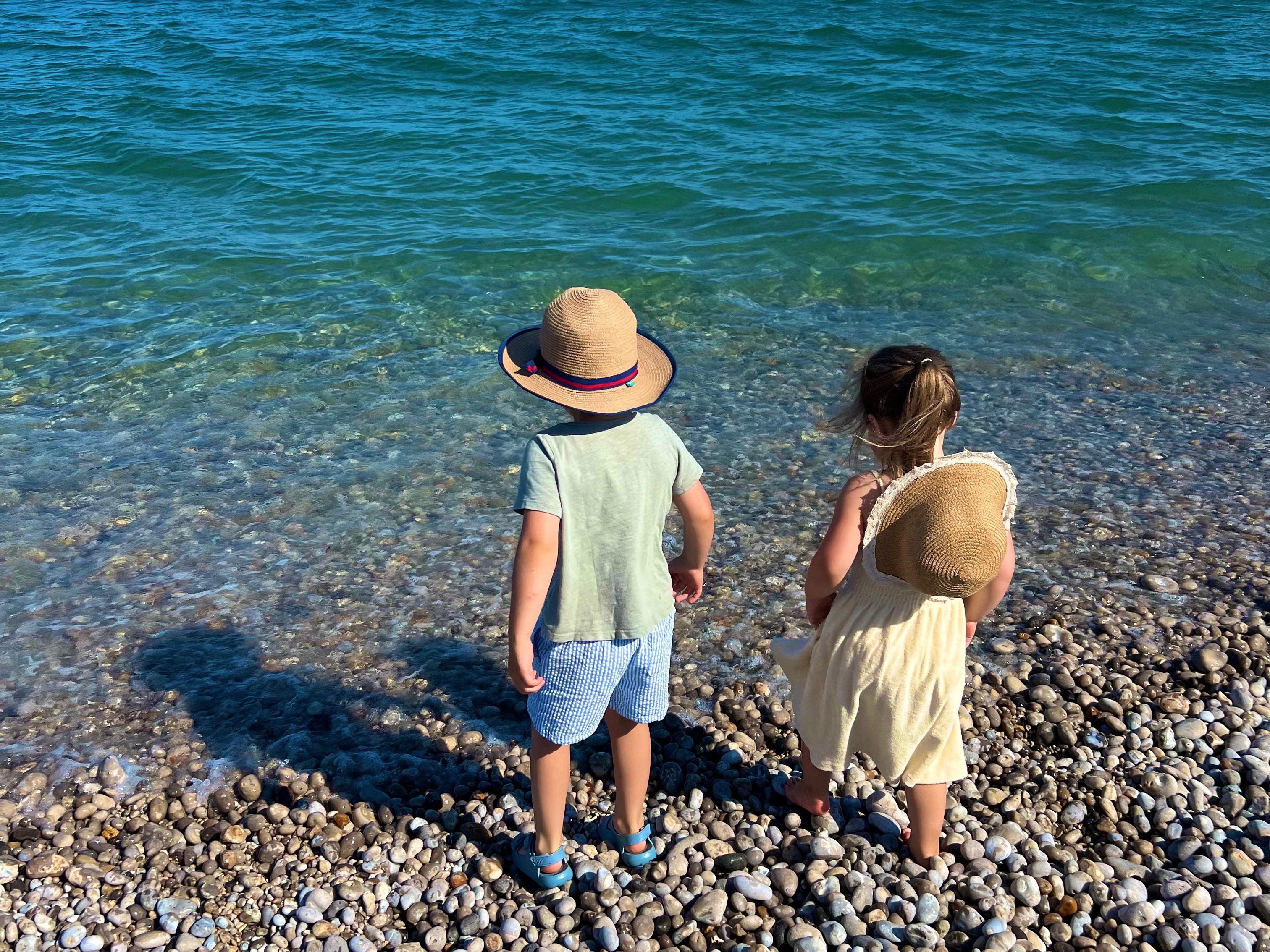
Paris empties (of locals). The coast fills. Whole families decamp to the same seaside town or countryside house their grandparents went to, and they go there every year for the rest of their lives, and their children’s children will probably go there, too.
The first August I lived through this I thought it was insane. Where are the people. Why is my pharmacy closed. Who decided this. The second August I started planning around it. The third August I closed my own laptop on July 31st, looked at it for a long moment, and went outside.
Vacation in the American sense, this is not. It’s the thing your real life is arranged around. A national agreement, renewed annually, that for one month nobody is going to pretend anything is more important than lunch.
8. The culture of discretion.
This one took me the longest to see, because the absence of a thing is always harder to notice than the presence of one.
French elegance, the actual kind, has almost nothing to do with what you can afford and almost everything to do with what you choose not to do. You do not over-explain. You do not over-decorate. You do not over-praise. You do not over-display. Nobody walks into a room and announces what they paid for the thing they are wearing (unless it was a bargain, and in that case it’s time to brag). Nobody mentions the brand.
If something is beautiful, it does not need to announce itself.
I noticed this most clearly at a friend’s house, an old farmhouse with stone walls and beams the color of dark tea. The kitchen had one extraordinary copper pot hanging from a hook. One. Not seven. Not a pegboard arrangement curated for Instagram. One pot, very old, very loved, hanging exactly where it was used. I stood there looking at it for longer than was probably normal. That’s the whole move, I thought. Pick the one good thing. Hang it where you can see it. Stop there.
I am working on it.
9. The everyday petit.
The French add petit to almost everything. Un petit café. Un petit dessert. Une petite promenade. Un petit apéro. Une petite visite. Un petit moment.
It is not literal. The coffee is not measurably smaller. The dessert is, frequently, not small at all (for French standards). Petit is a softening. It is a way of telling the universe (and yourself) that whatever you are about to do is a small, manageable, charming thing rather than a large, complicated, time-consuming thing. It lowers the stakes. It makes everything more intimate. It makes you, almost imperceptibly, a slightly more relaxed person.
You are not going for a walk that will take an hour and require sunscreen and a water bottle and a charged phone. You are going for une petite promenade. You are not making dinner. You are putting together un petit dîner. You are not having people over for what will become an evening you have been secretly preparing for for three days. You are having them over for un petit apéro.
I now use petit in English, which sounds insane, and I will be doing it forever.
10. The old people, who are still in the village.
In our village, the older residents are everywhere. At the boulangerie at eight in the morning. On the bench outside the Mairie at eleven. At the café at twelve-thirty. Walking dogs. Playing petanque near the village square. Driving small cars at speeds that are technically legal. Watching everything.
They know everything. They know which house had the wedding in 1968. They know where the original well was on our property. They know which family planted banana trees in our potager. They know which corner of the field never freezes. This is the part of the deal you don’t read in advance. In a small French village, your house has a biography, and you are merely its current chapter.
I love this. I love it for them, for the visible, greeted, woven-in dignity of growing old somewhere that still has you in it. I love it for my children, who say bonjour to grandmothers at the boulangerie and have absorbed, in some preverbal way, that old people are not a separate species kept in a separate building. And I love it for me, because I would like, very much, to one day be the woman on the bench outside the Mairie, watching everything, telling some bewildered new American where her well used to be.
There are more, of course. There is the way the church bells still ring the hours and most of us no longer notice. There is the fact that you can buy four kinds of butter at the smallest village shop. There is the bonne soirée you say to absolutely everyone after about 6pm. There is the post office, which I dreaded for about six months before realizing the staff comes around the counter to help you use the self-service machine. The post office here is, somehow, pleasant.
I'll get to those. For now, the church bells just rang noon, and the bonjour-ing is about to start at the boulangerie without me.
Bonjour,
Kamille
If you’d like more of these (the small things that don’t make it into the bigger essays, the village rumors, the slow restoration of a 300-year-old building, the chickens, the bluebells, the brocante finds), I’d love to have you along. Free essays twice per month. A paid version for the readers who want the whole story. Either way, thank you for reading.
What a wonderful read - the part about the elderly members of the community being valued and respected was surprisingly moving. It was so lovely to read a description of the precious knowledge that a person who’s lived in a place all their lives can impart to new, younger residents. And I also had to smile at your lesson in Bonjour-ing: we sail to France every summer, spending about 2-3 months traversing Brittany, the Vendee and Charente regions in our sailing boat. My French is rusty but enthusiastic, and I learnt early on to Bonjour everyone I made eye contact with. I love it!
I love what you are doing. ❤️ 24 years ago my husband and I relocated to France. When I am in the states, I find myself saying the same things that you are saying. “In France, we leave our eggs in the pantry - they haven’t been bleached and had their protective covering destroyed” “In France, the oldest member of our village is the most respected.” I’m so glad you are posting your journey! Bisous.